
NEW BEGINNINGS
A new chapter does not erase the life that came before it. It gathers what you have learned and asks what you would like to carry forward.
HOME & DESIGN
Our surroundings cannot solve everything, but they can make daily life gentler, clearer, and more supportive while we find our footing.
A home often carries the evidence of the life we thought we would be living. After divorce, loss, an empty nest, relocation, or financial change, familiar rooms can begin to feel strangely out of step. The space may still function, yet it no longer reflects the person living there.
This does not mean you need a renovation, a shopping spree, or a perfectly styled room. It means your home may need to be reintroduced to your present life. Design, at its best, is not decoration for decoration's sake. It is the thoughtful arrangement of daily living.
Start with safety and ease
Before choosing colors or furniture, notice what makes the day harder than it needs to be. Is the entry cluttered because there is nowhere to place a bag? Is the bedroom full of objects that interrupt rest? Is the chair you use most uncomfortable? Does poor lighting make evenings feel flat or isolating?
Begin by improving one point of friction. Add a hook where you naturally reach for one. Move a lamp beside the reading chair. Place the things you use every morning within easy reach. Clear a path through the room. Ease is a form of care.
Edit before you add
Transitions often leave us surrounded by objects chosen for a former household, identity, or routine. You do not have to make sweeping decisions while emotions are raw. Begin with three categories: keep close, store for later, and release without regret.
Keep close what is useful, beautiful to you, or connected to a memory you genuinely want nearby. Store what you are not ready to decide. Release what belongs only to obligation, guilt, or someone else's expectation of who you should be.
Create one room that feels unmistakably yours
If the whole house feels overwhelming, choose one small area. It might be the corner where you drink coffee, the bedside table, a desk, or the chair near a window. Give that space a clear purpose and build it around how you want to feel there: calm, capable, curious, rested, or inspired.
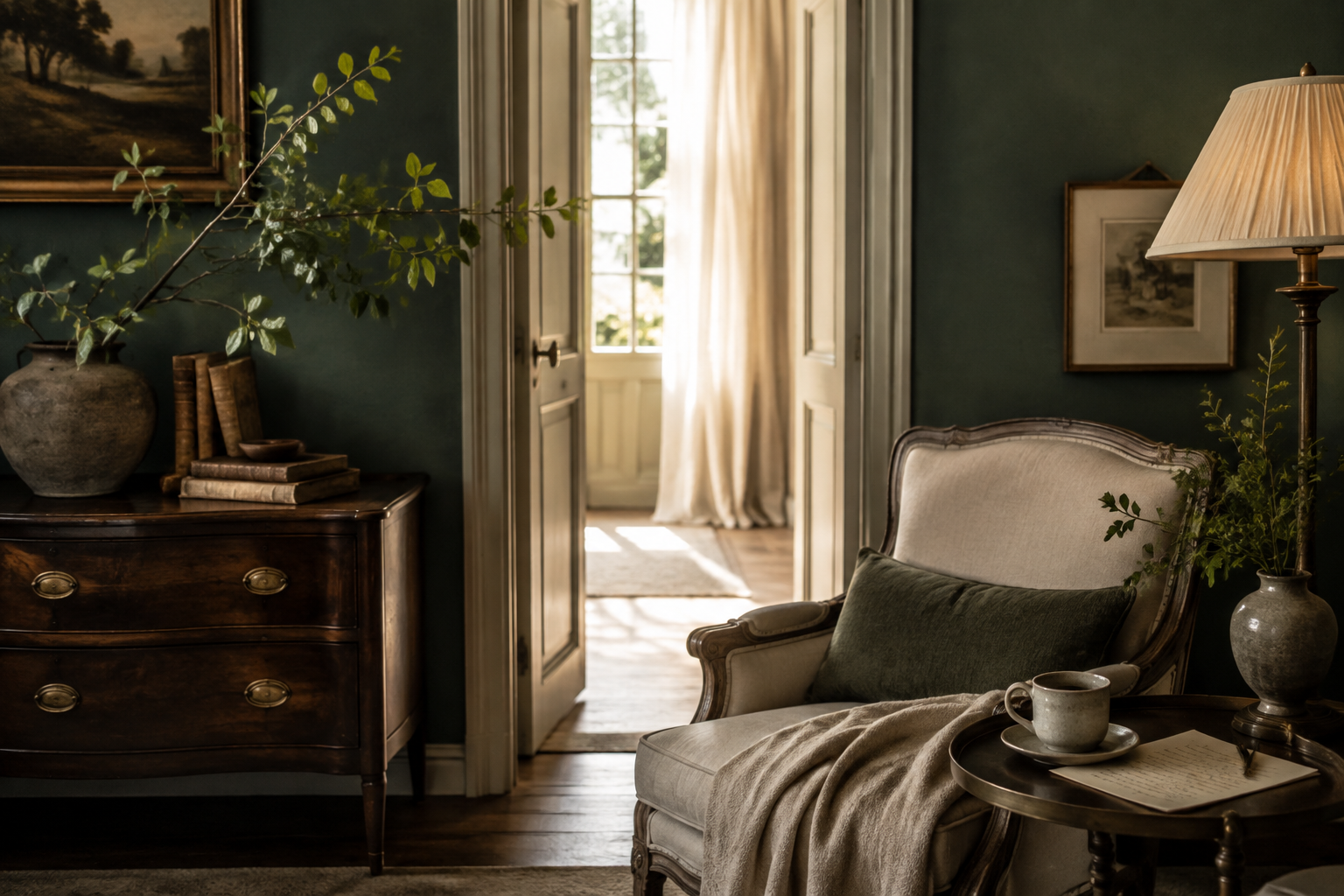
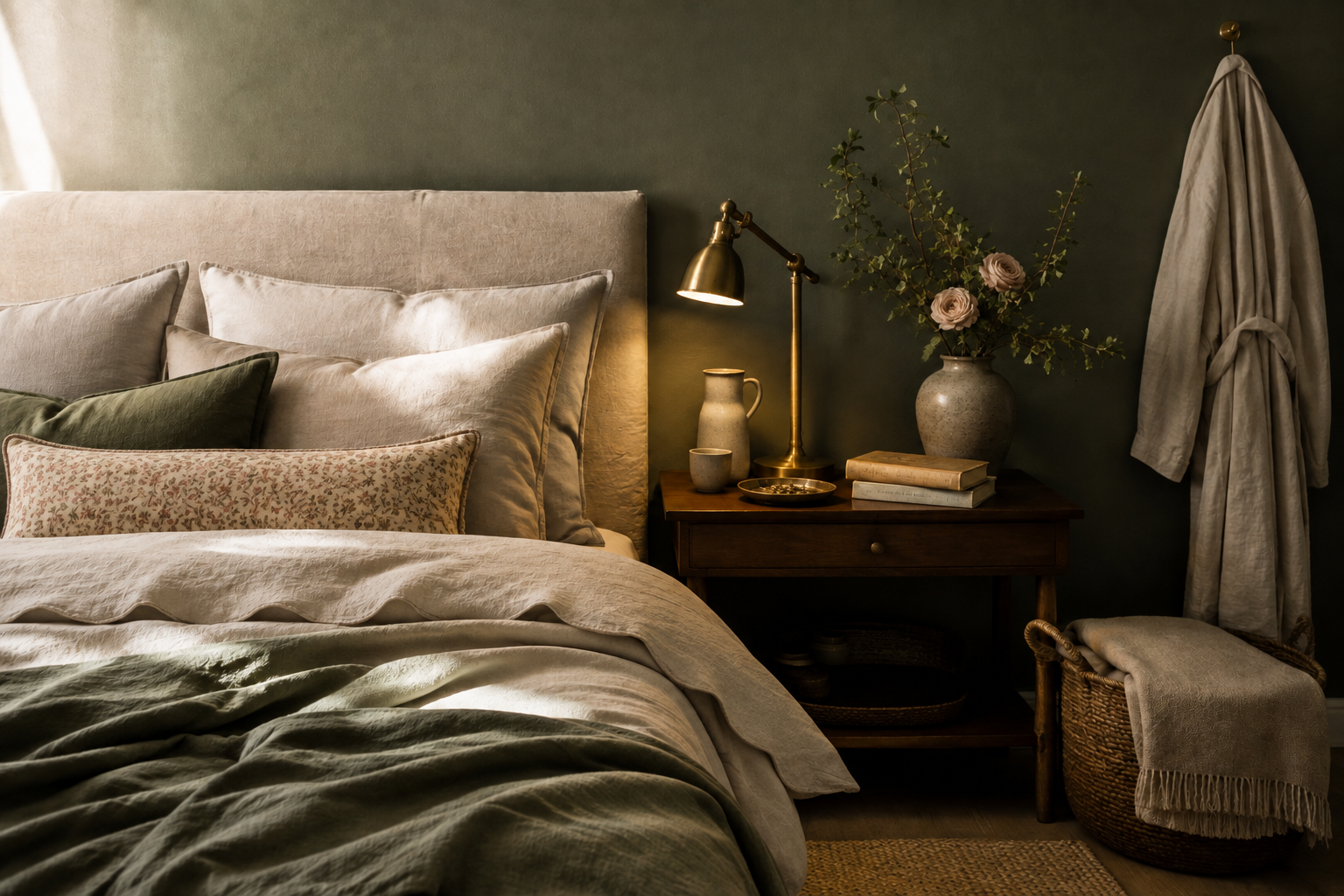
Choose a limited palette. Bring in natural materials such as linen, wood, stone, pottery, or a clipped branch. Use warm, layered light rather than relying on a bright overhead fixture. Include something made by hand and something that holds a story. A room becomes personal through selection, not accumulation.
Let function carry beauty
The most restorative spaces are not precious. They support real life. A beautiful basket can collect paperwork. A small tray can organize the objects that otherwise scatter across a counter. A curtain can soften a room while adding privacy. Open shelves can hold both the dishes you use and the books you return to.
When function and beauty work together, the home asks less from you. It becomes a quiet partner in the life you are rebuilding.
Allow the room to evolve
You do not need to know your forever style. The goal is not to finish the room; it is to let the room support you now. Leave a little space unfilled. Notice how you use the home over several weeks. Add slowly, and choose only what deepens comfort, purpose, or pleasure.
A new chapter does not require a brand-new house. Sometimes it begins when one familiar room finally reflects the woman who lives there today.
Begin with one corner: Choose a space you use every day and make one change that brings greater ease, beauty, or a sense of ownership.


